
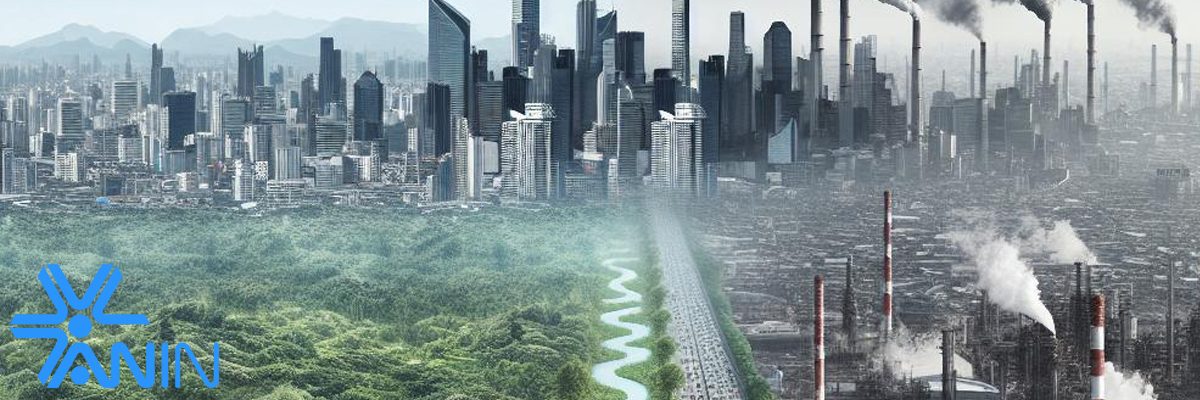
Urban developments have played a decisive role in shaping modern societies in recent decades. With rapid population growth, increasing service needs and development requirements, cities are forced to expand their infrastructure and implement a series of development, transportation, construction and infrastructure projects in line with current technologies. However, an important question always arises: does the implementation of urban projects focus on development or is it a threat to the environment?
This question is especially important for companies such as Anin Engineering Company, which is responsible for the design and implementation of large urban projects. Because every development plan, in addition to its engineering function, has extensive environmental, social and economic impacts that must be assessed and managed before any decision is made. This article attempts to examine the relationship between urban development and the environment from a scientific and organizational perspective and to explain the role of Anin Engineering Company in creating a balance between these two vital sectors.
The necessity of urban development in the modern era
Urban development is not a choice; it is an inevitable necessity. The increase in urban population, the expansion of economic activities, the need for housing, the growth of transportation, the increase in the volume of public services, and the change in lifestyle are all factors that require urban managers to define and implement new projects. The main reasons for the necessity of urban development are:
Responding to the needs of citizens
Over time, cities need new service spaces, standard streets, health facilities, educational centers, and smart networks. These needs cannot be met without targeted development.
Improving the quality of urban life
Expanding public transportation, designing green spaces, renovating worn-out neighborhoods, and creating standard infrastructures reduce problems such as pollution, traffic, and inefficient textures.
Increasing Economic Productivity
Direct and indirect urban projects drive economic growth, improve land values, move capital, and create jobs.
Increasing Urban Resilience
Cities need more resilient infrastructure to face crises such as earthquakes, floods, droughts, and climate change. Despite these imperatives, it is important that any development be based on scientific principles, sustainable design, and environmental considerations; otherwise, the negative consequences will outweigh the short-term benefits.
Environmental Threats from Urban Projects
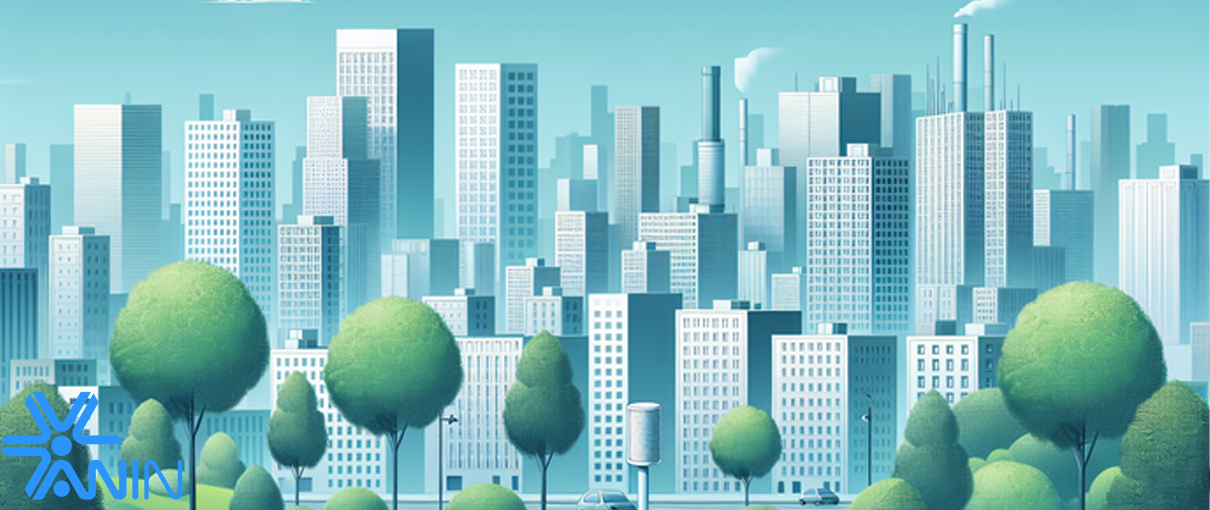
The impact of urban projects on the environment, if implemented without proper assessment and management, can cause severe pressures on the environment. These threats have various dimensions and their impact is both short-term and long-term.
Destruction of vegetation and habitats
Construction on virgin urban and suburban lands causes the destruction of vegetation and changes in natural patterns. This leads to a decrease in biodiversity, soil erosion and increased pollution.
Pollution from construction operations
The activity of heavy machinery, trucks, excavation, concreting and material transportation processes increases air and noise pollution. These pollutants can endanger public health.
High and sometimes irreversible consumption of natural resources
Traditional materials such as cement, steel, sand and gravel are consumed on a large scale, which puts great pressure on natural resources.
Increasing urban temperatures (heat island)
Concrete, asphalt and tall buildings absorb a lot of heat. The result is an increase in urban temperatures, a decrease in quality of life and an increase in energy consumption.
Disruption of groundwater flow
Improper projects can block groundwater flow, increase flood risk and change the hydrological patterns of the region.
The role of Anin Engineering Company in sustainable urban development
Sustainable development means creating a balance between urban progress and the protection of natural resources. Anin Engineering Company, with extensive experience in infrastructure and construction projects, can create this balance through specialized and organizational approaches.
Design based on environmental impact assessment
One of the most important professional approaches of Anin Engineering Company is conducting scientific assessments before the start of the project. In these assessments, the short-term and long-term effects of the project on soil, air, water, vegetation and social health are examined.
Using new and energy-efficient technologies
New equipment, lightweight materials, and technologies such as BIM, industrial construction methods, and renewable energies reduce energy and resource consumption.
Waste reduction and management
Principled management of construction waste, the use of recyclable materials, and the prevention of excess waste generation are key measures of Anin Engineering Company.
Priority for renovation instead of horizontal development
Recreating a dilapidated structure from an engineering and environmental perspective is much more valuable than developing in virgin lands. This approach preserves nature and increases urban quality.
Key solutions for aligning urban development with the environment
In order for urban projects to become an opportunity to improve the quality of life and protect the environment, a set of solutions must be implemented in an integrated manner.
Green space-based development
Creating parks, sidewalks, bike paths, and planting green spaces can transform the city into a healthier environment.
Using environmentally friendly materials
Materials such as lightweight concrete, recycled materials, energy-efficient paints, and temperature-controlled glass help reduce pollution and energy consumption.
Energy management in buildings
Designing buildings with energy-efficient standards, using double-glazed windows, thermal insulation, and solar energy play an important role in creating a green city.
Developing sustainable transportation
A modern and integrated transportation network can reduce air pollution and fuel consumption.
Global Examples for Sustainable Urban Development
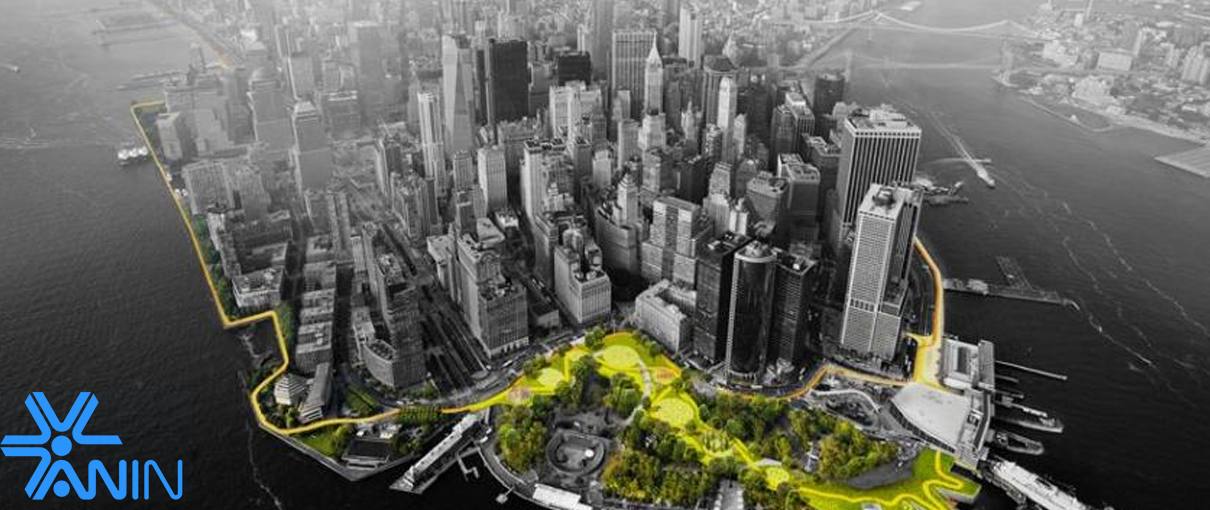
Many countries have shown that urban development and environmental protection can go hand in hand.
Singapore
It is one of the greenest cities in the world, with more than a third of its area covered by green space.
Copenhagen
Aiming to reduce carbon emissions, it implements its urban projects based on renewable energy.
Vancouver
In designing projects, it emphasizes the preservation of natural resources and the use of environmentally friendly technologies.
Conclusion
Urban projects are the beating heart of development, but this development will only be valuable when it is accompanied by environmental considerations. If development is carried out without planning, it is a threat to nature. However, if it is implemented based on sustainable and scientific principles, it can significantly improve the quality of life. Consultants at Anin Engineering Company, with a specialized, scientific and organized approach, are able to design and implement urban projects in a way that, while meeting development needs, causes minimal damage to the environment and creates a sustainable future for cities.
Frequently asked questions about the impact of urban projects on the environment
-
Do urban projects always damage the environment?
No, if the principles of sustainability and assessment of the impact of urban projects on the environment are observed, the damage can be managed or prevented.
-
What is the most important environmental threat to development projects?
Destruction of vegetation and increased air and noise pollution.
-
How can urban development be coordinated with the environment?
Using new technologies, green materials, renovation of worn-out structures and energy management.
-
What is the role of engineering companies in sustainable development?
Scientific design, environmental assessment, selection of appropriate materials, and project implementation with minimal negative impact on nature.